

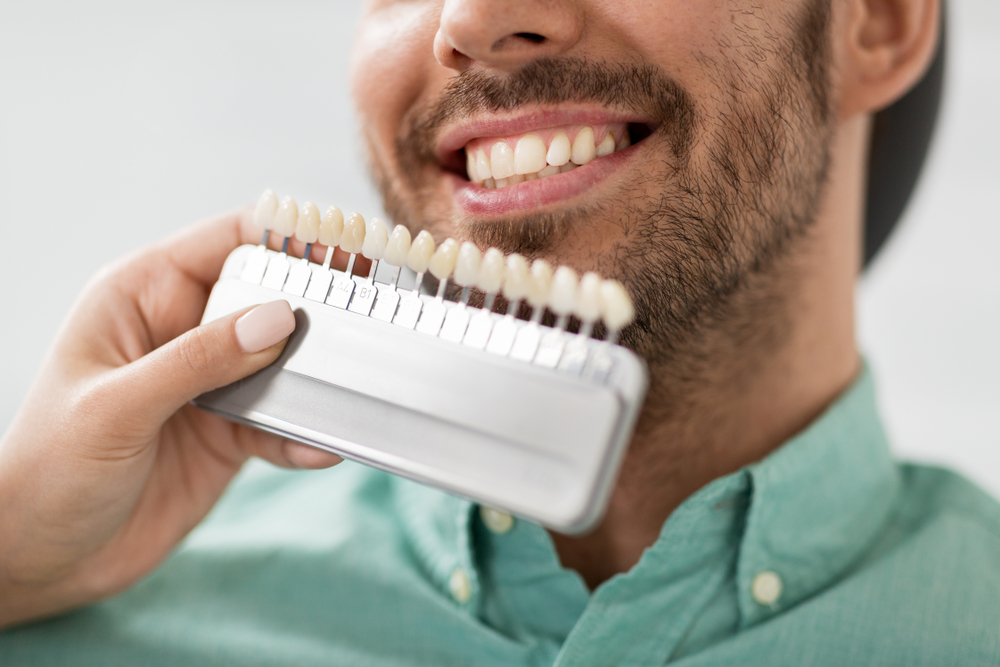
Dental veneers are one of the most versatile cosmetic treatments available, offering a way to address a wide range of aesthetic concerns in just two or three appointments. They are thin shells bonded to the front surface of your teeth that can change the color, shape, size, and overall appearance of your smile in a lasting, natural-looking way. For patients who have lived with discoloration, chips, gaps, or uneven teeth, veneers often deliver results that other treatments simply cannot match.
At Newton Smile Centre, Veneers are part of our complete cosmetic dentistry menu. Our team works closely with each patient to determine whether veneers are the right fit for their goals and oral health situation, and we take care to achieve results that look and feel entirely natural.
What Are Dental Veneers?
A dental veneer is a thin covering, usually made from porcelain or composite resin, that is bonded permanently to the front face of a tooth. The veneer mimics the appearance of natural tooth enamel and can be shaped and shaded to blend seamlessly with your surrounding teeth. Veneers are used to address a variety of aesthetic concerns, including deep staining that whitening cannot reach, chips, cracks, uneven length, gaps between teeth, and mild irregularities in shape or alignment. Because the veneer covers only the front surface, the underlying tooth structure remains intact.
Types of Dental Veneers
Porcelain Veneers
Porcelain veneers are the most common and durable type. They are fabricated in a dental lab from a custom impression of your teeth and bonded during a second appointment. Porcelain closely resembles the translucent quality of natural enamel and resists staining from coffee, tea, and wine better than composite resin. With proper care, porcelain veneers typically last 10 to 20 years or longer.
Composite Resin Veneers
Composite resin veneers are sculpted directly onto the tooth surface in a single appointment. They require no lab fabrication time and are generally less expensive than porcelain, but they are more susceptible to staining and chipping over time. Composite veneers can be a practical option for minor corrections or when a shorter timeline is a priority.
No-Prep Veneers
No-prep veneers, often referred to by brand names like Lumineers, require little to no removal of the tooth’s natural enamel before placement. They are thinner than traditional veneers and work best for patients with minor discoloration or slight surface irregularities. Not every patient is a good candidate, as they can add bulk to teeth that are already large or prominently positioned. Your dentist will advise whether no-prep veneers are appropriate for your specific anatomy.
The Veneer Placement Process
Consultation and Planning
The process begins with a consultation to discuss your goals, evaluate your bite, and confirm that veneers are appropriate for your situation. Veneers require sufficient healthy enamel on the tooth surface for bonding. Patients with active gum disease, significant cavities, or severe misalignment may need to address those conditions first. Your dentist will explain what to expect at each stage before any treatment begins.
Tooth Preparation
For traditional porcelain veneers, a small amount of enamel (typically less than a millimeter) is removed from the front surface of each tooth to create space for the veneer and ensure a flush, natural result. Digital or physical impressions are then taken and sent to the dental lab. Temporary veneers are placed to protect the prepared teeth while the permanent restorations are being fabricated, which usually takes one to two weeks.
Bonding the Veneer
At the placement appointment, the temporaries are removed and the permanent veneers are checked for fit, shape, and color. The tooth surface is lightly etched to create a strong bonding surface. A dental cement is applied, the veneer is positioned precisely, and the cement is hardened with a curing light. Once bonded, excess cement is removed and the bite is evaluated to confirm proper alignment. The result is permanent and immediately visible.
Are You a Candidate for Veneers?
Good candidates for veneers are patients with healthy teeth and gums who want to address cosmetic concerns that whitening or bonding cannot fully resolve. Veneers work well for discoloration, chips, minor gaps, and uneven tooth length or shape. They are generally not the first recommendation for patients who grind or clench their teeth significantly, as the force can crack porcelain over time unless a nightguard is incorporated into the plan. For patients whose primary concern is tooth color rather than shape, our professional teeth whitening service may be a less involved alternative. For those interested in a comprehensive refresh, a smile makeover consultation lets us explore how veneers, whitening, and other treatments can work together toward a unified result.
How Long Do Veneers Last?
The longevity of veneers depends on the material used and how well they are cared for. Porcelain veneers last 10 to 25 years on average with proper maintenance. Composite resin veneers typically need repair or replacement after 5 to 10 years. Because placement involves removing a thin layer of enamel, veneers are a permanent commitment: once placed, the teeth will always need to be covered. This is why it is worth taking the time during consultation to confirm that veneers are the right choice for your goals before proceeding.
Caring for Your Veneers
Caring for veneers is similar to caring for natural teeth. Brush twice daily with a non-abrasive fluoride toothpaste and floss every day. Visit Newton Smile Centre for regular cleanings and exams so we can monitor the condition of both the veneers and the underlying teeth. Avoid biting directly into very hard foods, using your teeth as tools, or chewing on ice or hard candy, as these habits can chip or crack the veneer material. Wearing a custom nightguard protects your veneers if you grind your teeth during sleep.
Schedule a Veneer Consultation
Our expert dental team is here to answer your questions and walk you through every aspect of the veneer process before any treatment begins. We take the time to understand what you want your smile to look like and explain exactly what is involved so you can make a confident, well-informed decision. Call us today at our office in Newton Centre and together we’ll determine if veneers are the best solution for you.
Frequently Asked Questions About Dental Veneers
Do veneers damage your natural teeth?
The preparation process for traditional porcelain veneers involves removing a thin layer of enamel from the front of each tooth, which is a permanent change. However, this enamel removal is minimal and the veneer itself protects the remaining tooth surface. The teeth remain structurally sound. No-prep veneers remove little to no enamel, though they are not appropriate for every case. Your dentist will explain the preparation requirements fully before treatment begins.
Are veneers covered by dental insurance?
Most dental insurance plans classify veneers as a cosmetic procedure and do not cover the cost. In cases where a veneer is placed to repair a structurally compromised tooth rather than for cosmetic reasons, partial coverage may be possible depending on your plan. We recommend checking with your insurance provider and asking our front office team about financing options available at Newton Smile Centre.
Will veneers look natural?
When properly designed and placed, porcelain veneers are virtually indistinguishable from natural teeth. The fabrication process involves custom shading and shaping to match your surrounding teeth and complement your facial features. Porcelain has a natural translucency that reflects light similarly to tooth enamel. The goal is always a result that looks like the best version of your natural smile rather than something obviously artificial.
How many veneers will I need?
The number of veneers depends on your goals and which teeth are visible when you smile. Some patients address just one or two teeth affected by a chip or stain. Others choose a full smile makeover covering the upper front six to eight teeth. Your dentist will discuss the options during your consultation and show you how different approaches would affect the overall appearance of your smile before any treatment is finalized.
Is the veneer placement process painful?
Most patients tolerate the preparation and bonding appointments comfortably with local anesthetic. The enamel removal is minimal and does not reach the inner layers of the tooth where nerves are located. Some patients notice mild sensitivity in the days between preparation and final placement while wearing temporaries. This typically resolves once the permanent veneers are bonded. Your dentist will explain what to expect at each stage so you feel prepared before the appointment begins.