
Dental Fillings in Newton, MA
At Newton Smile Centre, we offer tooth-colored composite fillings that restore the strength and natural appearance of your tooth in a single comfortable visit. Our mercury-free, white fillings are shade-matched to your existing enamel so the result blends in completely, and most people will never know a cavity was there.
Restorative Treatments
Cavities don’t announce themselves. Many patients come in for a routine exam and are surprised to learn they have decay that needs treatment. The good news is that catching it early means a straightforward fix, and modern composite fillings make that fix virtually invisible.
What Causes Cavities?
Tooth decay begins when bacteria in your mouth feed on sugars and produce acids that attack your tooth enamel. Over time, this acid erodes the enamel and creates a small hole, called a cavity. Without treatment, the decay spreads deeper into the tooth, reaching the dentin and eventually the pulp, which can cause significant pain and infection. At that stage, the repair typically requires much more than a simple filling.
If Dr. Benaissa identifies decay during your exam, addressing it early with a composite filling is the most conservative and cost-effective path, preserving more of your natural tooth structure and preventing a more involved restoration down the road.
Do You Need a Dental Filling?
Not every tooth problem is obvious. Some early cavities cause no discomfort at all. Signs that a filling may be necessary include sensitivity or pain when biting, chewing, or consuming hot, cold, or sweet foods; a visible dark spot or discoloration on a tooth; a rough or uneven texture you can feel with your tongue; or a crack allowing bacteria to enter. An X-ray taken at a routine visit is often the only way to catch a cavity forming between teeth before it becomes symptomatic. That is one reason we encourage keeping up with regular cleanings and exams. Catching decay early keeps your treatment simple.
What to Expect During Your Filling Appointment
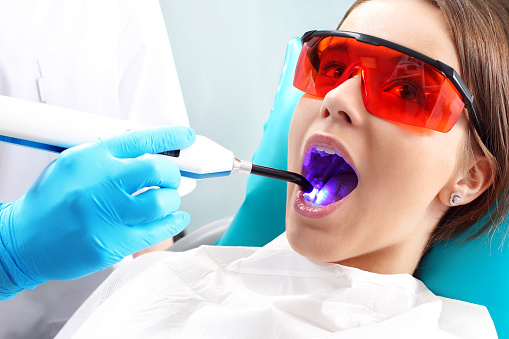
Most fillings are completed in a single visit and take 30 to 60 minutes. We start by numbing the area completely so you feel comfortable throughout the process. Once the area is numb, we remove the decayed portion of the tooth, leaving behind only healthy tooth structure. The tooth is cleaned, and a mild conditioning gel is applied to help the composite resin bond securely. We select a composite shade that matches your natural enamel before placing and sculpting the resin into the space. A curing light hardens the material in seconds. We then check your bite and polish the surface smooth. You can typically eat and resume normal activity the same day, though mild sensitivity in the first day or two is common.
Tooth-Colored Fillings vs. Silver Amalgam
Many Newton patients have older silver amalgam fillings placed years or decades ago. Mercury-free composite resin is today’s preferred alternative for several reasons: it bonds directly to your tooth structure (strengthening the tooth rather than just filling the void), it requires less removal of healthy tooth to place, it does not expand and contract with temperature changes the way metal does, and it is virtually invisible. Whether you are treating a new cavity or considering replacing an older metal filling for cosmetic or clinical reasons, we are happy to walk you through your options during a consultation.
How to Keep Cavities from Forming
The best filling is the one you never need. Reducing your risk is straightforward: brush twice a day with a fluoride toothpaste, floss daily to clear debris from between teeth where decay most commonly starts, limit sugary and acidic foods and drinks, and stay consistent with your professional cleanings every six months. Fluoride treatments and dental sealants are also effective preventive tools we offer at Newton Smile Centre, particularly for back teeth that are harder to clean thoroughly at home.
Dental Fillings at Newton Smile Centre
Dr. Walid Benaissa, DMD, earned his doctorate from Tufts University School of Dental Medicine and has dedicated his career to staying at the forefront of dental technology and continuing education, including completion of the prestigious Dawson Academy program. He is a member of the American Dental Association and the Massachusetts Dental Society. Newton Smile Centre has served Newton Centre patients since February 2010. Our team takes the time to explain exactly what we are seeing, show you findings on X-ray, and walk through your options with full transparency, so you make the decision that is right for you. We offer next-day appointments, convenient evening and Saturday hours, and easy online booking.
We are in-network with Delta, Cigna, Aetna, Humana, United, and MetLife. If you have been putting off a filling or are due for a checkup, contact us to schedule or book directly online below.
Frequently Asked Questions About Dental Fillings in Newton, MA
How long do composite fillings last?
With good oral hygiene and routine checkups, composite fillings typically last seven to twelve years or longer. Longevity depends on the size and location of the filling and how well you care for your teeth at home. Dr. Benaissa monitors fillings at each visit and will let you know if a replacement is warranted.
Will I need a shot to get a filling?
Most fillings require local anesthesia to keep you comfortable. We apply a topical numbing gel before the injection to minimize discomfort. The area typically remains numb for one to two hours after the appointment.
Can you replace my old silver fillings with white ones?
Yes. Many patients ask about replacing aging or cracked amalgam fillings with tooth-colored composites. We evaluate each filling individually and recommend replacement when there is decay underneath, a fracture, or a clinical concern. We do not recommend removing a filling that is in good condition without a clinical reason to do so.
Does getting a filling hurt?
The procedure itself should not be painful. You may feel pressure or vibration, but the area is fully numbed before we begin. Some patients experience mild sensitivity for a day or two after placement, which typically resolves on its own. If sensitivity persists beyond a week, contact us.
When should I call after getting a filling?
Reach out if your bite feels uneven after the numbness wears off, if sensitivity does not improve within a week, or if the filling chips or feels rough. We are always happy to see you for a quick follow-up adjustment.

About the Reviewer: Dr. Walid Benaissa, DMD
- Doctorate of Dental Medicine, Tufts University School of Dental Medicine (2004)
- Advanced training via the Maxicourse at NYU College of Dentistry — occlusion, implant restoration, full-mouth reconstruction
- Member: American Dental Association, Massachusetts Dental Society, American Academy of Group Dental Practices, The Dawson Academy
- Founder of Newton Smile Centre (2010)

About the Reviewer: Dr. Talar Kiladjian, DMD
- Doctorate of Dental Medicine, Boston University School of Dental Medicine
- Master's in Oral Health Sciences, Boston University School of Medicine
- Certified Invisalign provider; trained in CEREC same-day restorative technology
- Member: American Dental Association, Massachusetts Dental Society
Ready to Start the Conversation?
Whether you have a question about a treatment or you're ready to schedule, our team at Newton Smile Centre is here to help. We treat every patient like family and will walk you through your options.