

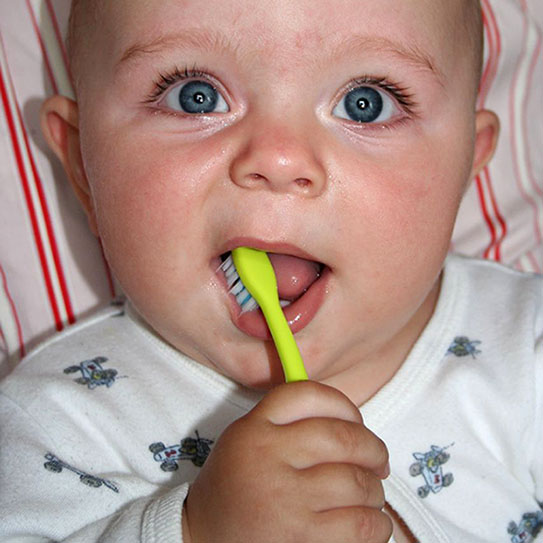
These days, there are so many toothbrushes to choose from that it’s hard to find the right one for ourselves, let alone our kids. It’s not as simple as just picking one, because not all children’s toothbrushes are created equal. Let’s go over a few of the factors to consider when searching for the perfect toothbrush for your child.
The Experts on Toothbrushes
Our top goal as dentists who work with young patients is to provide better dental care for families, which includes knowing which toothbrushes will be most helpful for children who are learning how to take care of their own teeth. Here’s a handy guide that can help you navigate the toothbrush aisle the next time you need to replace a toothbrush (which should be every few months — certainly by the time the bristles look bent).
Electric Versus Manual
The first big question you might be asking is whether to get a manual toothbrush or an electric one for your child. While both types of toothbrushes have the same capacity to clean teeth, with recent studies showing that electric toothbrushes remove as much plaque as manual toothbrushes, electric toothbrushes might be the better choice for some kids.
A child with a tendency to brush too hard, who has limited dexterity, who needs help getting to their molars, or who has special needs and difficulties may be more effective brushing with an electric toothbrush. If your child is great at brushing and wouldn’t benefit in this way, a manual toothbrush will be just great for them!
Search for the ADA Seal of Acceptance
A good way to narrow down the pool of toothbrushes to choose from is to only look for toothbrushes with the American Dental Association’s Seal of Acceptance. The Seal is awarded to toothbrushes every year by the ADA’s Council on Scientific Affairs, supported by a team of more than 750 leading scientists in fields like microbiology, pharmacology, toxicology, and chemistry. You know you can trust an ADA-approved toothbrush!
Bristle Hardness
This one might seem a little counterintuitive. We tend to think that firm bristles mean more effective scrubbing. However, we’re not trying to scrub out tile grout when we clean our teeth; teeth and gum tissue can be damaged by overbrushing, particularly with hard bristles. This is why we recommend soft-bristled brushes to our patients, especially for young children. Soft bristles are better for gums but still effective against plaque and food debris.
Toothbrush Size
It’s important to find a toothbrush that fits your child’s hand and mouth. They won’t be able to brush effectively with something too big, so make sure it’s a child-sized brush. A non-slip grip might also be a good idea if they have a tendency to drop their toothbrush.
Help your child brush for two minutes with this catchy toothbrush song:
Input From Your Dentist and Your Child
If you’d like our recommendations for great toothbrushes, we are happy to give them, but don’t forget to ask your child which toothbrush they like too! Once you’ve narrowed the options down to a few that meet all the requirements you’re looking for, let them choose their favorite color or cartoon character. They’re more likely to brush with a toothbrush they like! Schedule your appointment with Newton Smile Centre!
How often should I replace my child’s toothbrush?
You should replace your child’s toothbrush every three to four months, or sooner if the bristles begin to look frayed, bent, or worn. Worn bristles are less effective at removing plaque and can be harder on gums. It’s also a good idea to replace the toothbrush after your child has been sick, since bacteria can linger on bristles even after washing.
Is an electric toothbrush better for kids than a manual one?
Both electric and manual toothbrushes can be effective when used correctly. Research shows that electric toothbrushes remove comparable amounts of plaque as manual ones. That said, electric toothbrushes can be especially beneficial for children who brush too hard, have limited hand dexterity, have difficulty reaching back molars, or have special needs that make proper brushing technique harder to develop. If your child brushes well with a manual brush, there’s no urgent reason to switch — but if you’re struggling with technique or thoroughness, an electric option is worth trying.
What should I look for when buying a toothbrush for my child?
Look for a toothbrush that carries the ADA Seal of Acceptance, which confirms the product has been evaluated for safety and effectiveness by independent scientific review. Beyond that, choose a child-sized brush with a head that fits comfortably in your child’s mouth, soft bristles that won’t irritate gums, and a handle your child can grip easily. A non-slip grip is especially helpful for younger kids. Letting your child pick a color or character they like can also make them more enthusiastic about brushing.
What bristle hardness is best for a child’s toothbrush?
Soft bristles are the right choice for most children — and for most adults as well. Harder bristles do not clean more effectively and can actually damage tooth enamel and irritate gum tissue over time, especially if your child tends to brush with a heavy hand. Soft bristles clean effectively against plaque and food debris while being gentle enough to protect developing teeth and healthy gums. When in doubt, go softer rather than firmer.
At what age should a child start using their own toothbrush?
You can begin cleaning your baby’s gums even before teeth come in using a soft, damp cloth. Once the first tooth appears — typically around six months — you should introduce a small, soft-bristled infant toothbrush with a smear of fluoride toothpaste the size of a grain of rice. As your child grows and more teeth come in, gradually transition to a pea-sized amount of toothpaste. Children generally need help brushing until around age six to eight, when they develop enough dexterity to brush effectively on their own. Ask your dentist for guidance specific to your child’s development.