

Women faced an uphill battle establishing themselves in many career fields, dentistry included. That’s why, for Women’s History Month, we’re celebrating three pioneers for women in dentistry — women whose determination opened doors that had been firmly closed, and whose legacies continue to shape the profession today.
Lucy Hobbs Taylor
Lucy Hobbs Taylor, born in 1833, is recognized as the world’s first female dental school graduate. She applied to multiple dental schools and was rejected outright — not for lack of ability, but because of her gender. Undeterred, she apprenticed with a practicing dentist and began treating patients on her own before the Ohio College of Dental Surgery finally admitted her in 1865. She graduated in 1866 and went on to marry Civil War veteran James Taylor, also a dentist. Together they opened a practice in Lawrence, Kansas, where Lucy trained her husband in the art she had already mastered. Her story is one of persistence over prejudice, and she remained an advocate for women in the profession throughout her life.
Emeline Roberts Jones
Emeline Roberts Jones, born in 1836, entered dentistry through the apprenticeship tradition that was common in the 19th century. She trained under her dentist husband, Daniel Jones, and quietly began treating his patients when he fell ill — demonstrating her skill long before she sought formal recognition. After her husband’s death, she took over the practice entirely, operating it for more than 50 years. She was eventually admitted to the Connecticut State Dental Society after years of resistance from her male peers and became one of the first women accepted into the American Dental Association. Her longevity and consistency in the profession helped normalize the idea of women as dentists in an era when that was far from accepted.
Ida Gray Rollins Nelson
Ida Gray, born in 1867, was the first African-American woman to earn a dental degree in the United States. Orphaned young, she supported herself through school and worked as a seamstress while training under Jonathan Taft, a dentist and educator who championed women entering the field. She graduated from the University of Michigan Dental School in 1890 and established a practice in Chicago that served both Black and white patients during a deeply segregated era. That choice — to keep her practice open to everyone regardless of race — was a remarkable act of professional and personal courage. She is a trailblazer in every sense of the word.
The Enduring Impact of These Dental Trailblazers
The contributions of Lucy Hobbs Taylor, Emeline Roberts Jones, and Ida Gray left a permanent mark on the dental profession. Today, women make up more than half of all dental school graduates in the United States and hold leadership positions across every area of the field — a reality made possible in part by the doors these three women forced open against considerable resistance.
Their legacy is more than historical. It is a reminder that the quality of dental care a patient receives has nothing to do with the gender of the hands providing it — and everything to do with skill, dedication, and compassion. As we celebrate Women’s History Month, we honor what they started.
We hope these pioneers continue inspiring new generations of dentists!
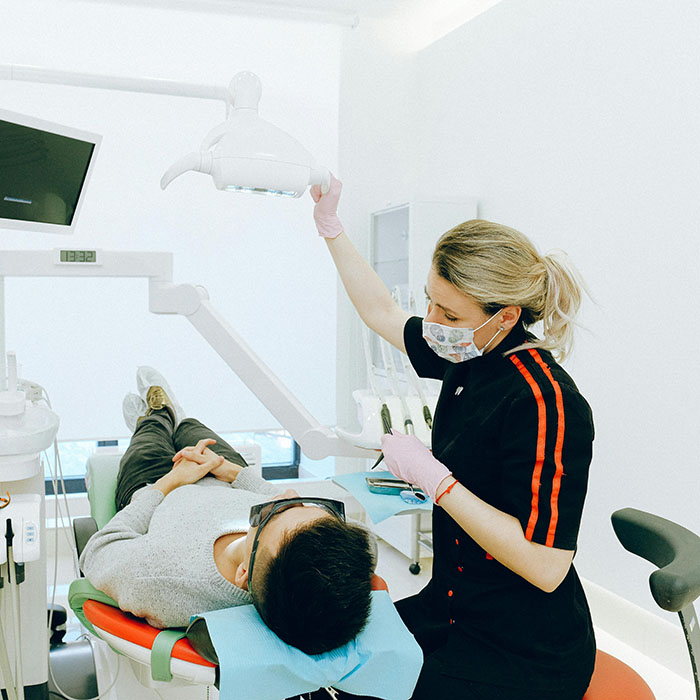
Top image used under CC0 Public Domain license. Image cropped and modified from original.
The content on this blog is not intended to be a substitute for professional medical advice, diagnosis, or treatment. Always seek the advice of qualified health providers with questions you may have regarding medical conditions.
Who was the first woman to earn a dental degree?
Lucy Hobbs Taylor is recognized as the first woman in the world to earn a dental degree. After being rejected by multiple dental schools, she persisted through apprenticeship and was finally admitted to the Ohio College of Dental Surgery, graduating in 1866. Her determination helped establish that women were not only capable of practicing dentistry but deserving of the same professional recognition as their male counterparts.
Who was the first African-American woman to earn a dental degree?
Ida Gray Rollins Nelson is recognized as the first African-American woman to earn a dental degree in the United States. She graduated from the University of Michigan Dental School in 1890 and established a dental practice in Chicago that welcomed both Black and white patients — a notable act of integration in a deeply segregated era. Her work broke barriers of both gender and race in the dental profession.
What percentage of dentists today are women?
Women now make up more than half of all dental school graduates in the United States and represent a growing share of practicing dentists nationwide. This shift has occurred over decades as the barriers that pioneers like Lucy Hobbs Taylor, Emeline Roberts Jones, and Ida Gray faced were gradually — and often forcefully — dismantled. Today, women lead dental practices, academic programs, and professional associations at all levels.