
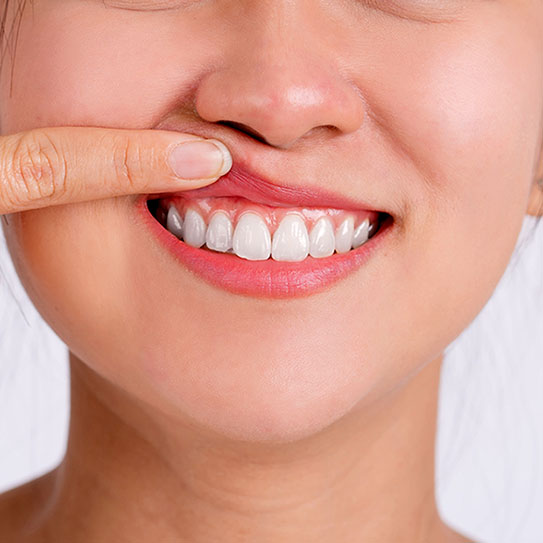
Gum recession is the process by which the gum tissue surrounding your teeth gradually pulls back, exposing more of the tooth root. When left unaddressed, recession can lead to increased sensitivity, a higher risk of tooth decay, and in more advanced cases, loosening or loss of the tooth. The good news is that many of the leading causes of gum recession are within your control, and catching it early makes a meaningful difference in what treatment is needed.
At Newton Smile Centre, we work with patients across Newton, Brookline, and the greater Boston area to identify and address gum concerns before they progress. Whether you are noticing teeth that look longer than they used to or increased sensitivity to temperature changes, our team can evaluate the condition of your gums as part of our preventive dentistry approach.
What Is Gum Recession?
The gums form a tight seal around each tooth, protecting the roots and the bone beneath them. When this tissue pulls back, it creates pockets between the gum line and the teeth where bacteria accumulate more easily. Over time, that bacterial environment can damage the soft tissue and the bone that anchors the teeth. Recession often develops slowly, which is why many people do not notice it until sensitivity or visible changes become hard to ignore. Your dentist measures gum attachment levels at each exam, which is the most reliable way to detect it early.
What Causes Gum Recession?
Several factors contribute to gum recession. Some are habit-based and respond well to correction. Others involve underlying conditions or anatomy that require professional management.
Overbrushing and Aggressive Technique
Brushing with too much force or using a hard-bristled toothbrush is one of the most common causes of gum recession. Gum tissue is delicate, and repeated trauma from aggressive brushing gradually wears it away. Using a soft-bristled toothbrush and holding it at a 45-degree angle to the gum line allows you to clean effectively without damaging the tissue. The same principle applies to flossing: snapping the floss forcefully against the gums rather than gently guiding it down the side of each tooth can cause gradual irritation and contribute to recession over time.
Periodontal Disease
Gum disease is a leading cause of gum recession in adults. In its early stage, called gingivitis, the gums become inflamed and bleed easily. If bacteria are not removed through consistent brushing, flossing, and regular professional cleanings, the infection can advance to periodontitis, where it attacks the bone and connective tissue holding the teeth in place. As these structures break down, the gum line recedes. Regular dental visits are the most reliable way to catch and treat gum disease before recession becomes significant.
Genetics and Natural Anatomy
Some people inherit thinner or more fragile gum tissue that is more susceptible to recession even with careful oral hygiene. The position of your teeth within the jaw also plays a role: teeth that sit outside the normal arch can put uneven pressure on the surrounding gum tissue, accelerating recession in those areas. If you have a family history of gum recession or periodontal disease, more frequent monitoring may be appropriate even when your hygiene habits are solid.
Bruxism (Teeth Grinding and Clenching)
Grinding or clenching your teeth places significant force on the teeth and surrounding structures. Over time, this pressure can cause the gum tissue to recede. Many people grind their teeth during sleep without realizing it, and the first signs are often worn tooth surfaces or morning jaw soreness. A custom-fitted nightguard can help distribute the force of grinding more evenly and protect the gum tissue from ongoing mechanical stress.
Tobacco Use
Tobacco in any form reduces blood flow to the gum tissue and impairs the body’s ability to fight infection. Smokers are significantly more likely to develop periodontal disease and experience gum recession than non-smokers. Quitting tobacco use is one of the most impactful steps a person can take for their gum health, and the benefits to gum tissue begin within weeks of stopping.
How to Prevent Gum Recession at Home
Most cases of lifestyle-related gum recession can be slowed or prevented with consistent daily habits. These are the practices that make the greatest difference:
- Brush gently twice a day with a soft-bristled toothbrush and fluoride toothpaste
- Floss once daily, guiding the floss gently between teeth rather than snapping it into the gum
- Rinse with an antimicrobial mouthwash to reduce bacterial accumulation
- Avoid tobacco products in any form
- Wear a nightguard if you clench or grind your teeth during sleep
- Limit acidic beverages that weaken enamel and irritate gum tissue
These habits reduce the conditions that allow recession to develop and support the long-term health of your gum tissue.
Professional Treatment Options
When recession has already occurred, professional treatment can stop further progression and, in some cases, restore tissue. According to the Cleveland Clinic, the treatment approach for gum recession depends on the underlying cause and the severity of the loss. Scaling and root planing is a deep-cleaning procedure that removes tartar and bacterial deposits from below the gum line and smooths the root surface to discourage future buildup. For more advanced recession, gum grafting surgery uses tissue from the roof of the mouth or a donor source to rebuild the gum line. Our soft tissue laser treatments can address certain gum concerns with greater precision and less recovery time than traditional surgical techniques. The right approach depends on the location and degree of recession, which your dentist will evaluate at a comprehensive exam.
The Dentist Is Your Best Ally
Because gum recession progresses without obvious symptoms in its early stages, regular dental exams are the most reliable way to catch it before it causes serious damage. Early intervention typically involves less invasive treatment and better long-term outcomes. If it has been more than six months since your last exam, scheduling an appointment is the most effective first step you can take.
Dr. Benaissa and Dr. Kiladjian take a thorough, individualized approach to periodontal health at Newton Smile Centre. Whether you are coming in for a routine exam or a specific concern about your gums, our team is prepared to give you a clear picture of what is happening and a practical plan for what can be done. Contact our office to schedule an appointment.
Frequently Asked Questions About Gum Recession
Can gum recession be reversed?
In most cases, gum tissue that has already receded does not grow back on its own. However, a gum graft procedure can restore the gum line by placing new tissue over the exposed root. Stopping the causes of recession through improved brushing technique, treating gum disease, and wearing a nightguard if needed can prevent further loss even when reversal is not possible.
How do I know if my gums are receding?
Common signs include teeth that appear longer than they used to, increased sensitivity to hot, cold, or sweet foods, a visible notch near the gum line, or a change in how your bite feels. Because recession progresses slowly, it can be hard to notice without comparing over time. Your dentist measures gum attachment levels at each exam, which is the most reliable way to detect recession in its early stages.
Does brushing harder clean teeth better?
No. Harder brushing does not improve cleaning and actively harms gum tissue and enamel. Plaque is a soft film that comes off with light pressure. What matters is consistency, angle, and coverage rather than force. A soft-bristled brush used gently for two full minutes, reaching every surface of every tooth, cleans more effectively and safely than aggressive scrubbing.
Is gum recession the same as gum disease?
They are related but not the same. Gum disease, or periodontitis, is a bacterial infection of the gums and bone. Gum recession is an outcome that can occur when gum disease progresses without treatment, but recession can also be caused by overbrushing, genetics, or bruxism in people who do not have active gum disease. Your dentist can determine the underlying cause and recommend the appropriate treatment path.
How often should I see a dentist if I have gum recession?
For most people experiencing gum recession, more frequent monitoring is recommended. Rather than standard six-month intervals, your dentist may suggest visits every three to four months, particularly if the recession is linked to periodontal disease. These shorter intervals allow the team to track gum attachment levels, remove any buildup that forms, and adjust your prevention plan based on how things are progressing.

About the Reviewer: Dr. Walid Benaissa, DMD
- Doctorate of Dental Medicine, Tufts University School of Dental Medicine (2004)
- Advanced training via the Maxicourse at NYU College of Dentistry — occlusion, implant restoration, full-mouth reconstruction
- Member: American Dental Association, Massachusetts Dental Society, American Academy of Group Dental Practices, The Dawson Academy
- Founder of Newton Smile Centre (2010)
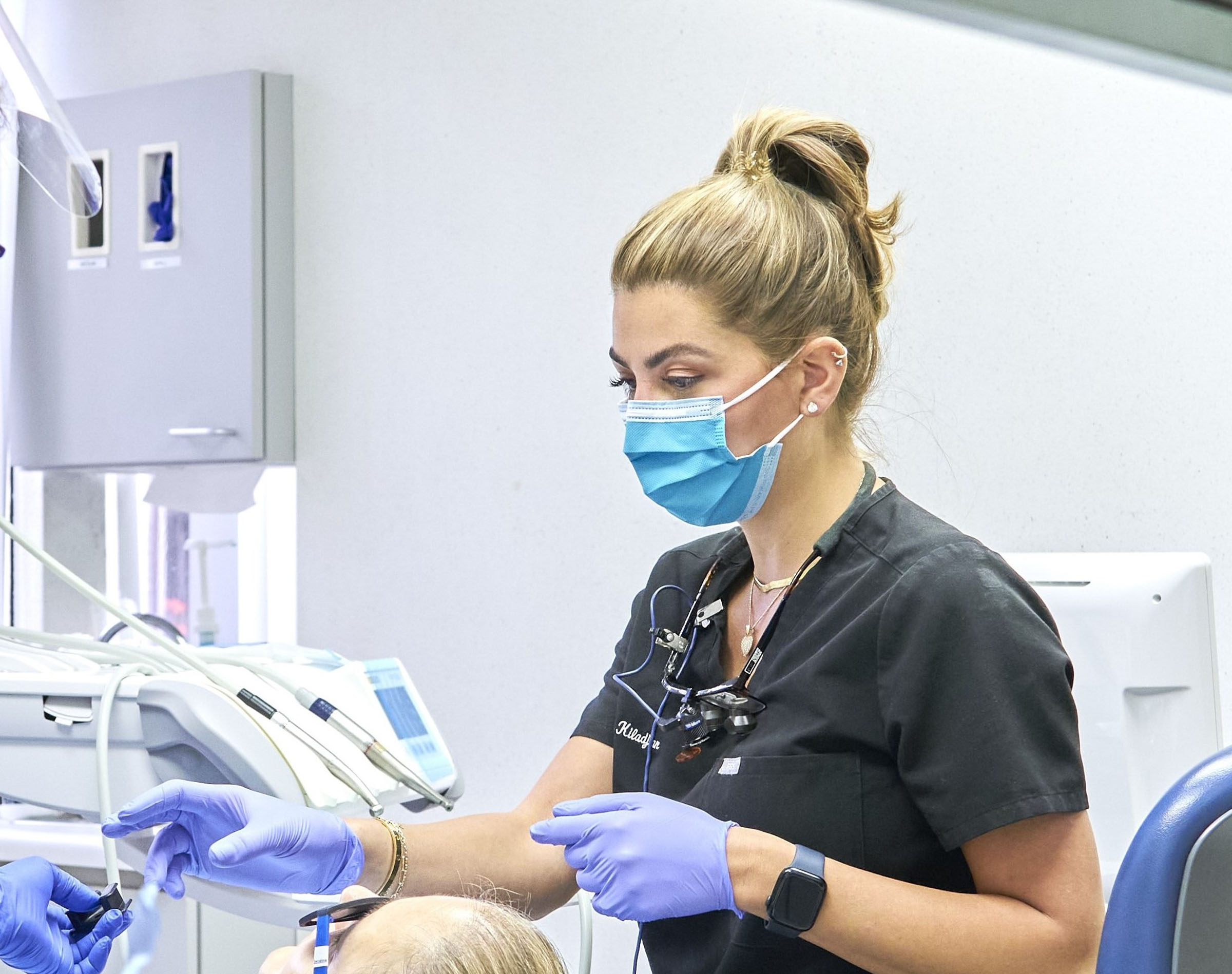
About the Reviewer: Dr. Talar Kiladjian, DMD
- Doctorate of Dental Medicine, Boston University School of Dental Medicine
- Master's in Oral Health Sciences, Boston University School of Medicine
- Certified Invisalign provider; trained in CEREC same-day restorative technology
- Member: American Dental Association, Massachusetts Dental Society