

Most people planning a smile makeover assume the conversation starts with what they want to fix. However, the first question should always be structural: what does the foundation look like, and what sequence is required before any cosmetic work goes in?
At Newton Smile Centre, Drs. Walid Benaissa and Talar Kiladjian have built their approach to multi-procedure smile makeover planning around two complementary training backgrounds. Dr. Benaissa earned his DMD from Tufts University School of Dental Medicine and completed the Maxicourse at New York University College of Dentistry. Dr. Kiladjian earned a Master’s in Oral Health Sciences from Boston University School of Medicine and her DMD from Boston University School of Dental Medicine, two programs, not one combined degree. When those two clinical perspectives come together on the same case, the treatment plan reflects it in ways that matter.
The Diagnostic Step That Comes First
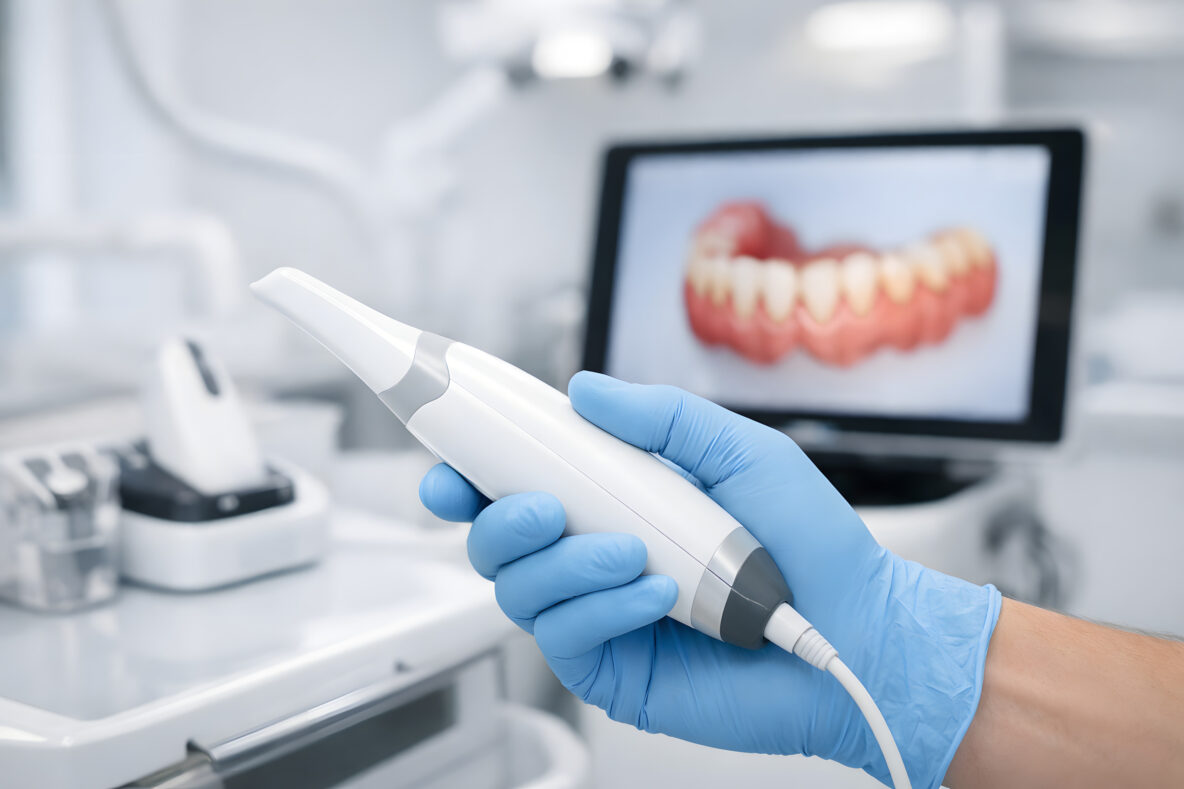
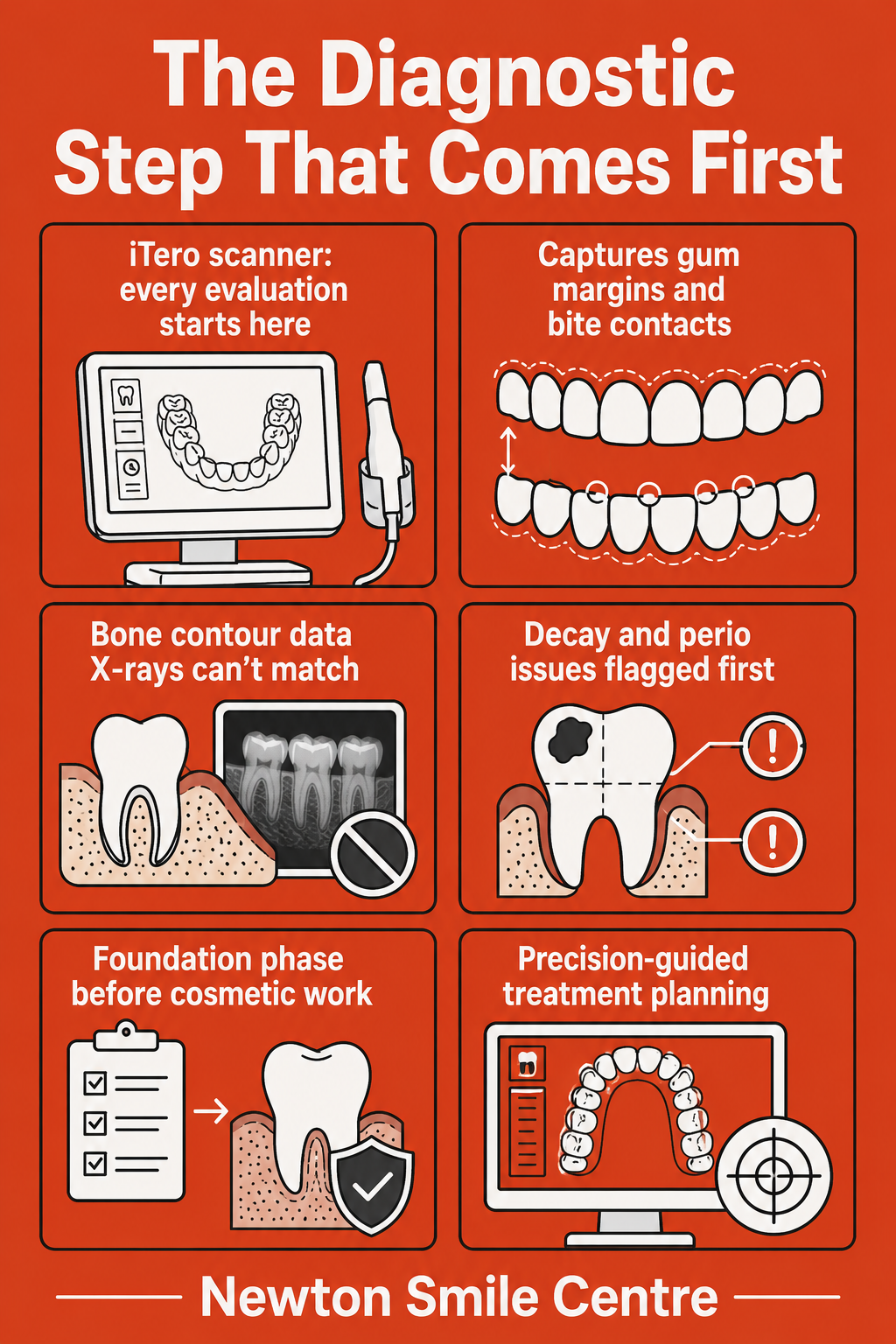
Newton Smile Centre’s iTero intraoral scanner is the tool Dr. Benaissa uses to open every multi-procedure evaluation. It generates arch-level structural data, including gum margin position, bite contacts, and bone contour, that photographs and standard X-rays don’t capture with the same precision. Any active decay, periodontal issues, or bite problems that appear in that data are treated during the foundation phase before cosmetic work is scheduled.
Dr. Benaissa uses that same scan to walk patients through the sequencing logic. He shows specifically where a proposed veneer would land relative to the gum margin, where a dental crown in the upper arch contacts the teeth below, and why the procedures he recommends are performed in the order they are. That kind of transparency is built into how we operate at Newton Smile Centre, and it is part of why patients return for subsequent phases of treatment rather than starting over somewhere else.
Whitening, Alignment, and Tissue Work
Teeth whitening is scheduled before dental veneers or dental bonding whenever both are in the same plan. Porcelain and composite resin lock in their shade at the time of placement. Bleaching agents act on natural enamel and do not penetrate the lab-fabricated materials we use for veneers and bonding. Scheduling whitening after the restorations are placed means natural teeth shift color while the fixed work does not.
When a patient’s plan includes Invisalign, the aligner phase finishes before restorations are placed. Veneers and crowns fabricated against an arch that has not finished moving are built for a position where the teeth will no longer fit after treatment ends. Soft-tissue contouring, when indicated, follows alignment and wraps up before final lab fabrication, so the gum margin that the porcelain is made to is the stable, permanent version.
When Procedures Share a Phase vs. When They Wait
Some procedures in a multi-step plan are genuinely independent and can run in the same phase without creating conflicts. Others depend on something upstream being finalized first, and combining them out of order yields results that must be corrected later. The planning work at Newton Smile Centre is identifying which is which before treatment begins. According to the Cleveland Clinic, cosmetic dentistry procedures such as teeth whitening, dental bonding, and veneers each require specific clinical conditions to achieve lasting results.
For patients using Cherry 0% financing at Newton Smile Centre, the phased timeline we recommend can be followed without compressing multiple stages into one block to fit a billing period.
Starting the Planning Process at Newton Smile Centre
A consultation with Dr. Benaissa or Dr. Kiladjian produces a treatment plan that is sequenced, not just itemized. Procedures are laid out in order, with rationale attached to each step and a timeline built around your actual schedule. Dr. Benaissa has practiced at Newton Smile Centre since earning his DMD at Tufts in 2004, and Dr. Kiladjian brings her Boston University dual-degree background to every evaluation. Patients returning for a second or third phase of a multi-step plan come back to the same practice, the same team, and the same doctors who built the original sequence.
If you want to understand how the procedures you are considering fit together toward one outcome, reach out through our contact form to schedule a consultation with the doctors directly.